A great custom T-shirt starts well before the ink touches fabric. The photograph you want across the front, the small club mark on the chest and the 80 matching shirts for an event are three different jobs. They may need three different production methods.
Here is the short version: DTG handles detailed, multi-colour artwork on suitable garments; DTF transfers a printed design onto a wider range of fabrics; and screen printing rewards simple artwork and repeat quantities. The right choice depends on the blank, the design and the run size.
Direct-to-garment: detail without a large setup
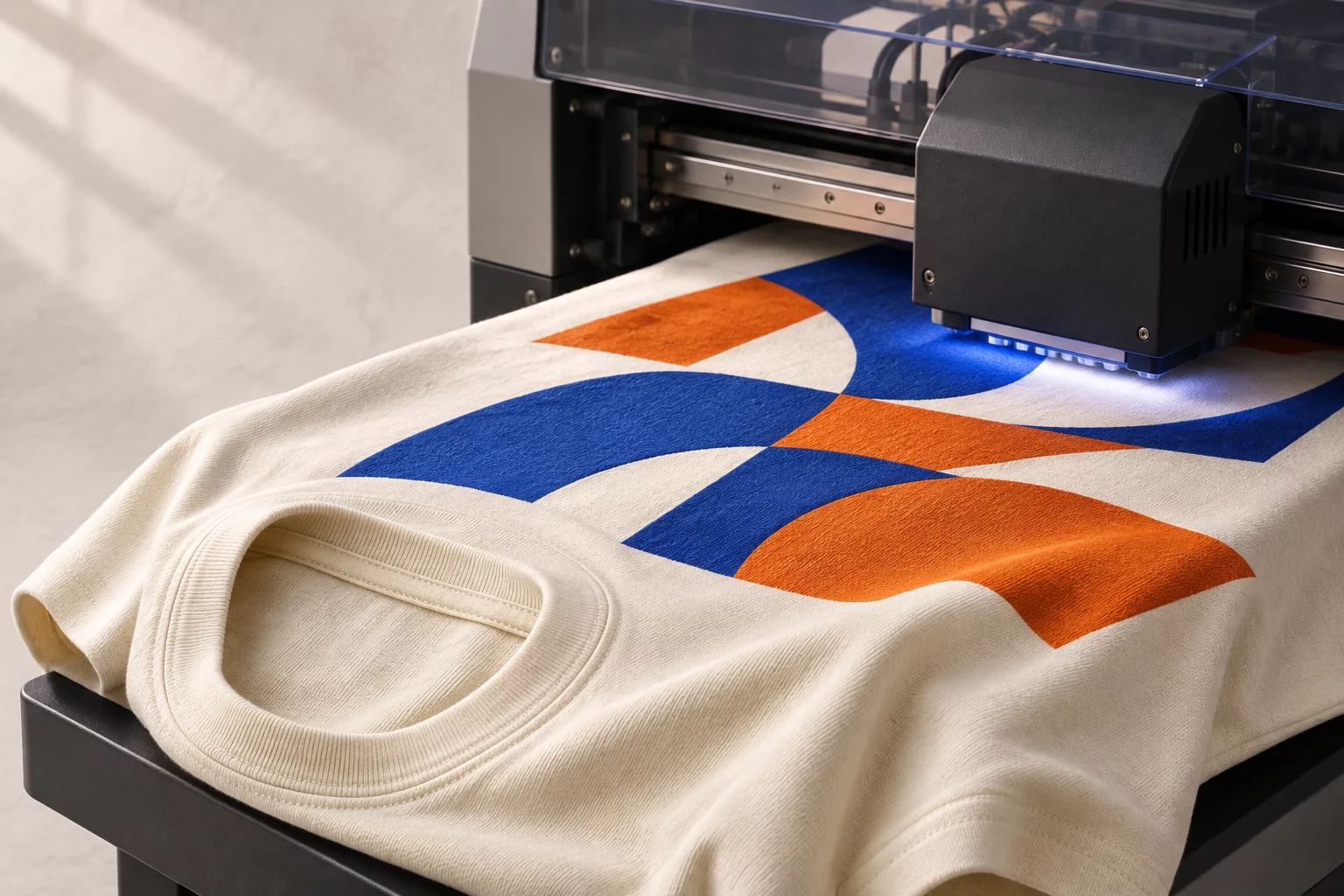
Direct-to-garment printing puts ink directly onto fabric. It is useful when a design has gradients, many colours or photographic detail and you only need a few pieces. A soft, breathable result depends on the garment, the artwork and the production settings. On dark fabric, a white underbase is commonly needed to keep colours visible.
DTG is not a magic fix for a tiny, low-quality image. If a photograph is blurry at the size you want on the shirt, printing it larger will expose the blur. Start with the original file and preview the design at its intended size.
Direct-to-film: flexible placement and fabric choice
With DTF, the design is printed onto a film, prepared with adhesive and heat-transferred to the product. It can be a good option for small runs, complex colours and garments that are less straightforward for DTG. Because the artwork sits on the fabric surface, a large solid area may feel different from a direct print. That physical feel matters on an everyday T-shirt.
Screen printing: strong repeat work
Screen printing uses a prepared screen to apply ink, usually colour by colour. The setup takes work, but repeating a bold design across many pieces can make excellent sense. It is especially suited to clear shapes and limited colour palettes. A full-colour photograph is possible only with a more involved separation process; it is rarely the simplest starting point for a small order.
What to check before ordering
- Size and position: a large centre print behaves differently from a small left-chest mark.
- Fabric and colour: they affect how the final design looks and feels.
- Detail: fine lines and tiny type can disappear when reduced.
- Quantity: one sample and a full team order have different economics.
At PrintYourNation you can place your artwork in Custom Studio, inspect the chosen product and save the design before ordering. For matching team or event pieces, use our bulk order form so the production approach can be reviewed against the actual brief. If you are still preparing your file, read our artwork preparation guide.
For a useful technical comparison, see Printful’s DTG and screen-printing guide. Final method and finish depend on the product and production review.